June 22, 2026
At Automate 2026, Intrinsic is showcasing the architecture behind modern industrial AI, including an early look at the modular Intrinsic Intelligence Cell and its role in building the machine shop and factory of the future
Key takeaways:
This week at Automate 2026 in Chicago, the Intrinsic team is unveiling an early look at a new robot workcell powered by Intrinsic Intelligence, that shows how AI can be infused into modular production, enabling businesses to build flexibly and adaptively with AI. We’re also sharing exciting updates around our AI for Industry Challenge, an open global developer competition designed to help solve one of the hardest problems in electronics assembly.
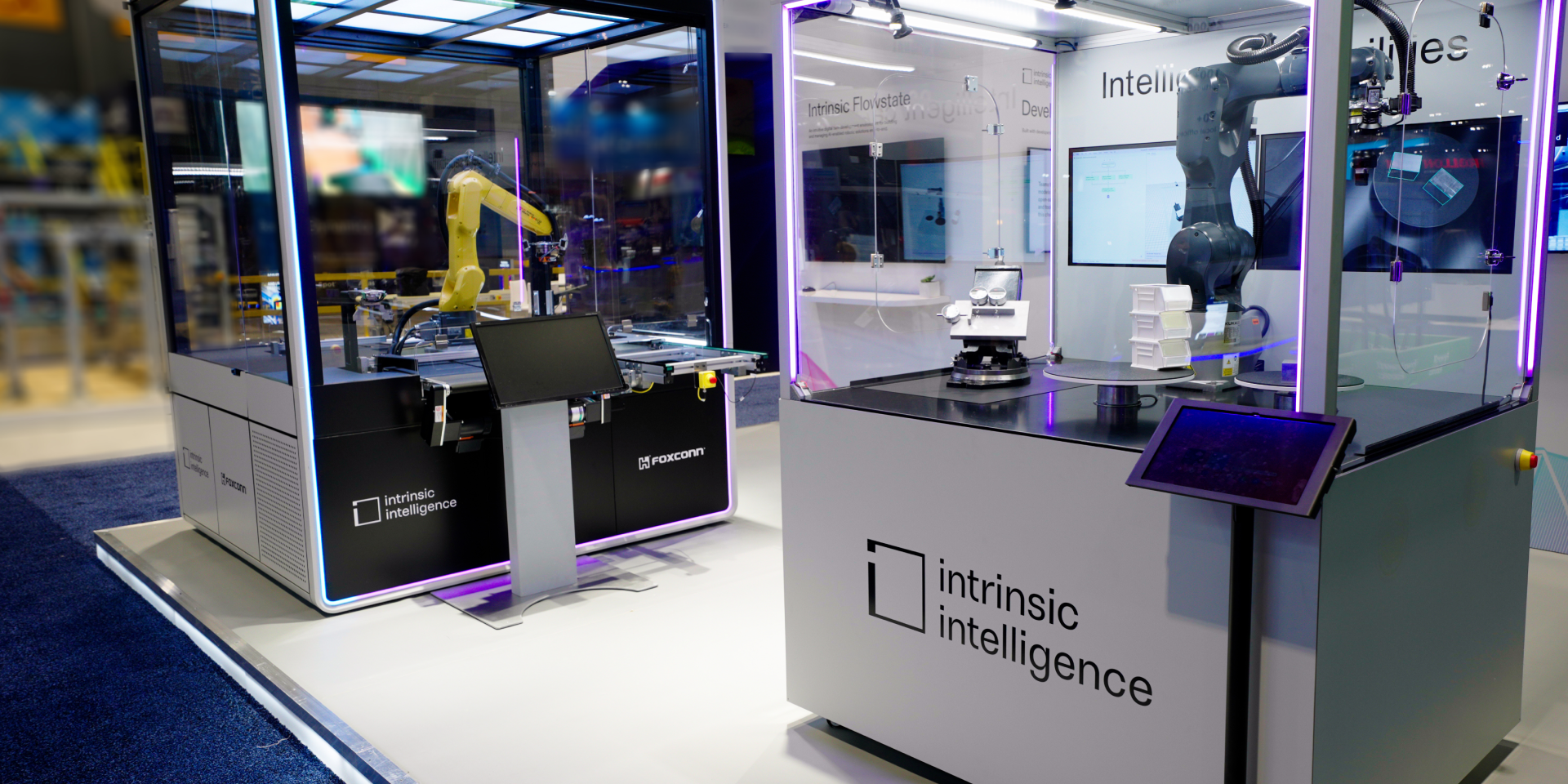
At Automate this year, we’re unveiling a first look at the Intrinsic Intelligence cell - a modular robot workcell built for AI. This reference design provides a head start or “physical template” for our partners to integrate AI-based robotics capabilities directly into automation products. Running on IntrinsicOS, the workcell is a skill-based automation system designed for complex assembly. It enables instant process and tool reconfigurations, supports diverse hardware and software, and features AI integration for intelligently adaptive robotics.
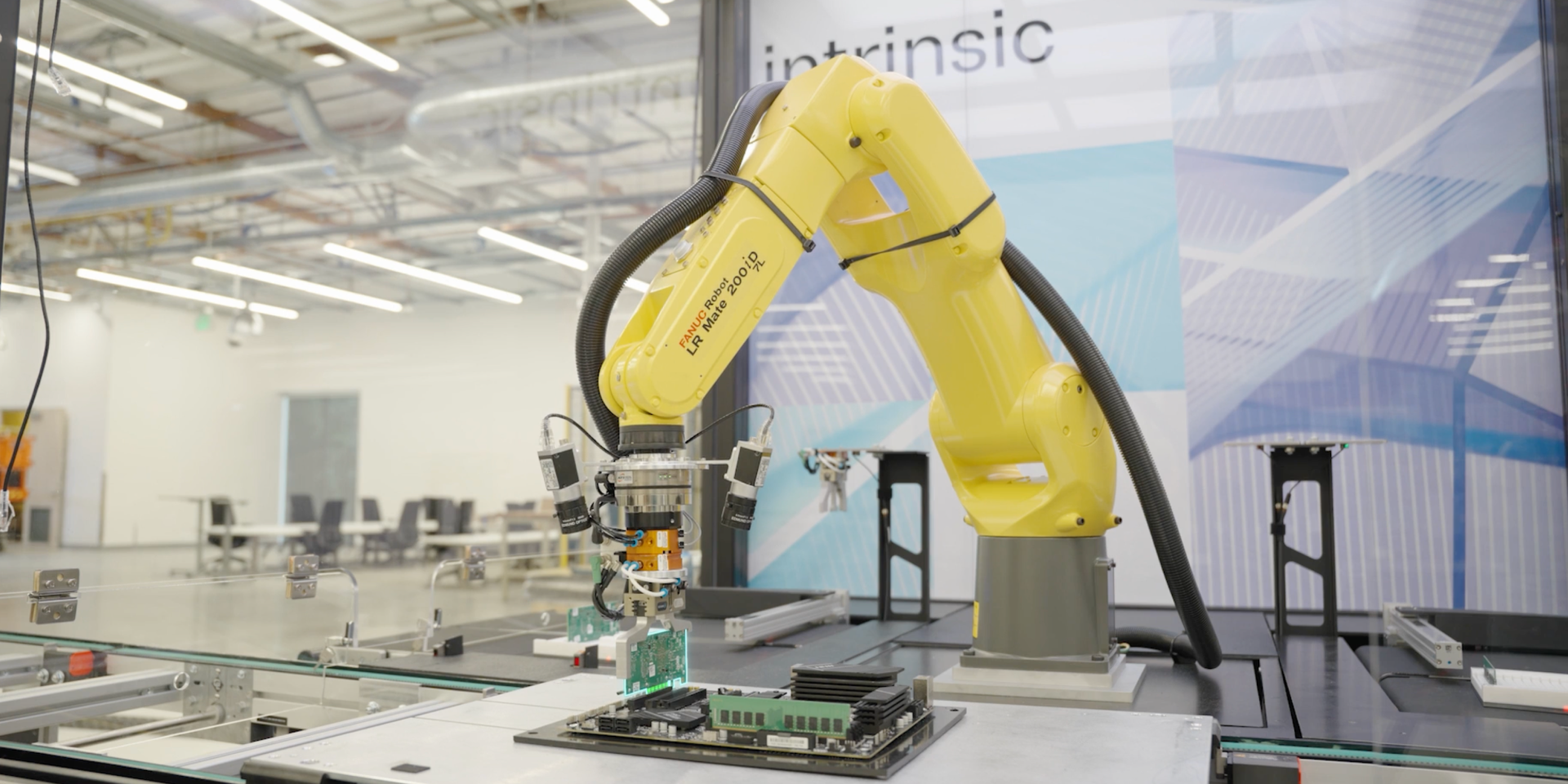
Companies of all sizes, from smaller machine shops to our Factory of the Future partner Foxconn, are investing in the transition to modular workcells that can easily adapt to changes in a product or process. A custom version of this workcell for electronics assembly will be piloted in Foxconn production facilities later this year. In the meantime we are showcasing a version of this AI workcell at Automate using a FANUC robot to demonstrate electronics assembly tasks. Our workcell is part of our broader collaboration to bring the best of FANUC to the Intrinsic platform, while reinforcing the importance of hardware interoperability.
“The intersection of AI with modular production is going to unlock new value and operating models across the industry. When both physical workcells and software-defined robotics enable more flexibility, it allows manufacturers of all sizes to build in new ways, and fundamentally shifts the economics of production.”
– Wendy Tan White, CEO of Intrinsic

0 / 0
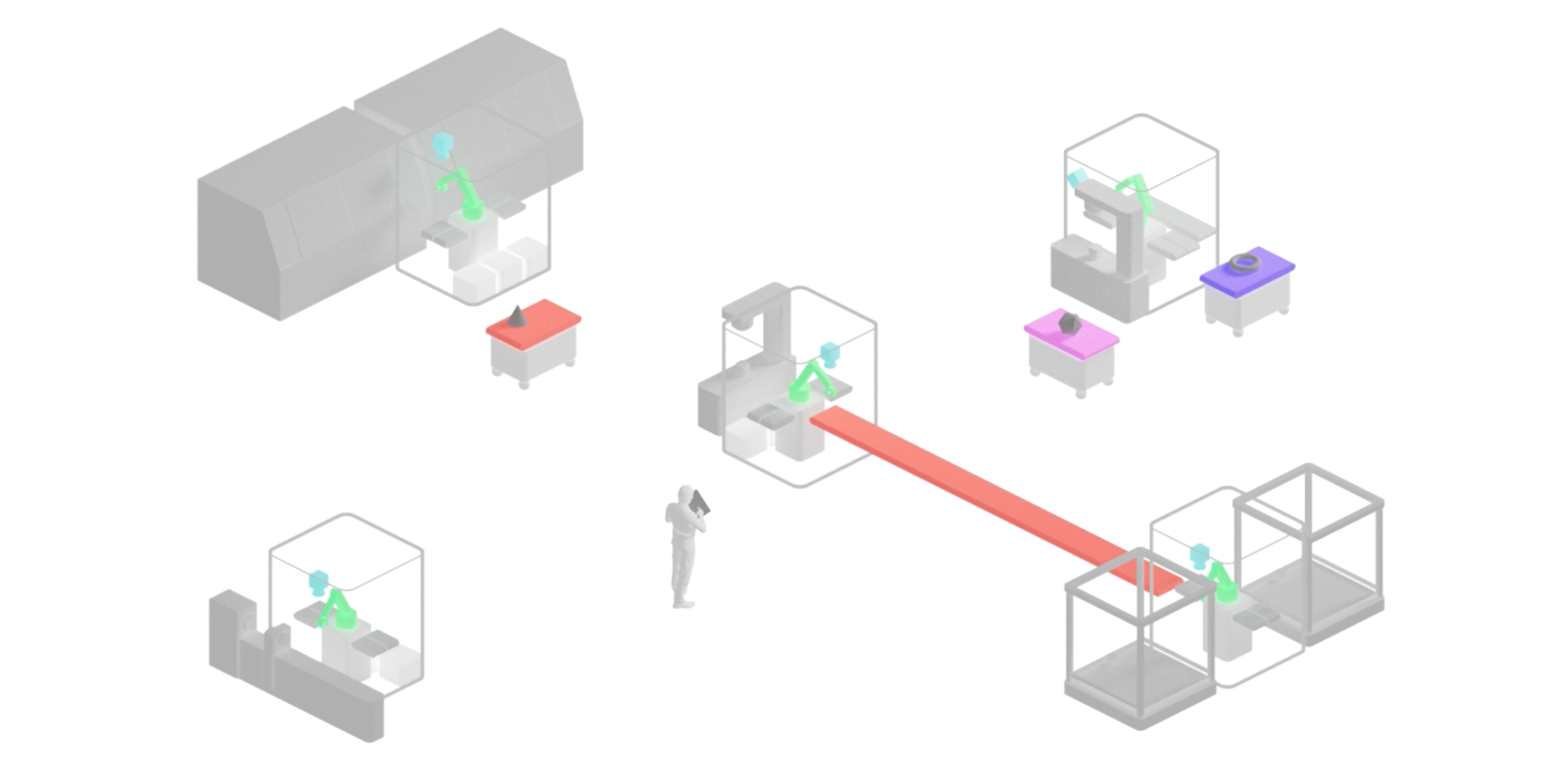
This software first, modular approach is making intelligent robotics accessible to manufacturers of all sizes. In the area of machine tending with robots, for example, we are working with CNC system integrators like Trinity Automation and MartinSystems to help them integrate AI skills and capabilities seamlessly into their next generation products. These are built for easy, manageable use on the machine shop floor – without the need to program a robot anymore. Integrating AI capabilities, like perception, automated robot motion planning, and the ability to grasp and insert parts, brings robotic assistance right to machine operators who can get more done. For machine shops, these solutions enable "high mix" production for smaller custom batches, and for more output from each machine. With no robot or AI expertise needed, robotics will become a more familiar, accessible tool for everyday productivity.
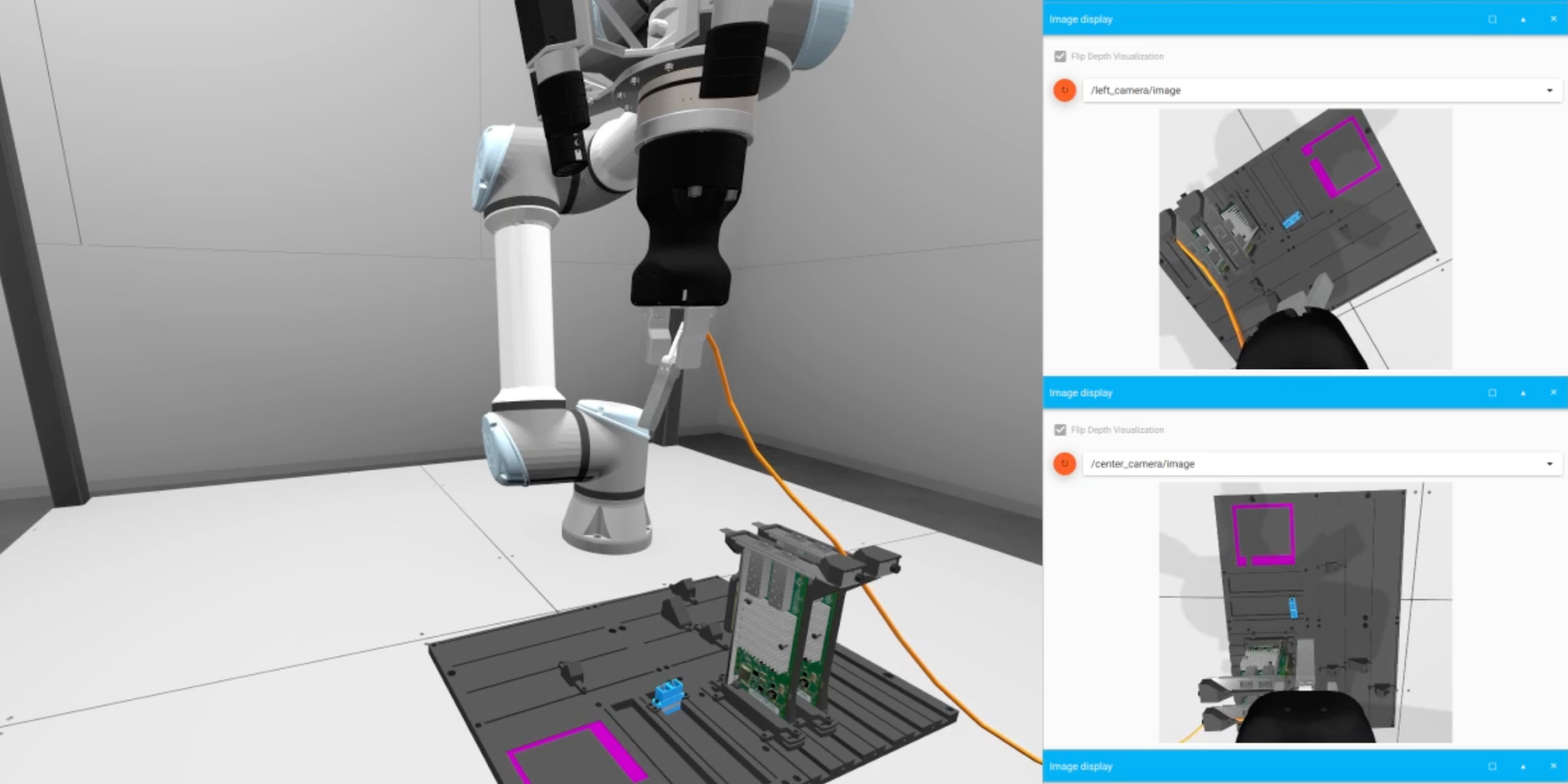
As part of these efforts to unlock new value for the electronics industry with software and AI-driven solutions, we have also opened greater access to the global developer community. Along with our co-organizers Open Robotics, we announced the global AI for Industry Challenge in 2025 to solve one of the hardest problems in electronics assembly: the dextrous manipulation of cables and connectors. With a $180,000 prize pool, this is a first-of-its-kind opportunity for the world’s best software and robotics developers to team up and tackle a seemingly intractable problem with their own AI policies. Using a variety of open source tools from Gazebo to Google DeepMind’s MuJoCo and NVIDIA Isaac Sim, we’ve seen tremendous progress so far.
The challenge had over 5,000 registrations across 1,600 teams spanning over 115 countries, with eight teams achieving near perfect scores so far through the simulation evaluation phase. 93% of the participants are proficient in Python, 73% with ROS and 47% work in AI, ML, and software engineering industries. Only 14% of participants work in robotics, pointing to substantial interest and untapped potential from the world’s leading software engineers to make a splash in robotics.
A total of 31 teams have made it to the next phase, where they validate their solution with Intrinsic’s software platform, including our development environment Flowstate and the Intrinsic Vision Model – a benchmark leading model for industrial-grade perception tasks. The top ten finalists will deploy their solution, remotely from wherever they are in the world, to a physical industrial workcell at Intrinsic’s HQ in California where it will be tested for real world performance.
0 / 0
At the heart of our mission is making AI robotics more accessible and valuable to millions more developers, businesses, and manufacturers across industries. AI is quickly accelerating that mission, making advanced solutions easier and more affordable to build, install, and manage day to day. What we’re witnessing is an economic paradigm shift, where the speed and cost of creating sophisticated robotics solutions is being reset.
At Intrinsic, we’re building with more than 1.3 million ROS developers in mind, who want to go from prototype to production faster and deliver industry-grade applications. The same is true for today’s expert systems integrators and automation providers, including those that service tens of thousands of machine and fabrication shops, as they look for reliable ways to integrate AI into their products.
Whether it’s a small regional machine shop, a machine tool maker or a massive international OEM, AI is quickly changing what’s possible with robotics, broadening who gets to work day to day with these powerful productivity tools. We are excited for a future where the size of your business doesn’t determine your access to the best in Physical AI, the benefits it brings your team, and the real value it unlocks.
0 / 0