September 22, 2026
We’re open sourcing core parts of the Intrinsic platform to unlock AI for developers building industrial robotics applications
Key takeaways:
At ROSCon 2026 in Toronto, we’re announcing Intrinsic Core™ so more of the world’s developers can build freely with foundational parts of the Intrinsic platform. Intrinsic Core is an open source set of ROS-compatible capabilities for building sophisticated robotic applications that will help enable the next generation of physical AI solutions. This is an important milestone for our mission to democratize access to intelligent robotics, which needs exponentially more developers entering the field and easier pathways for them to get started.
Available on GitHub today, Intrinsic Core makes it easier to build sophisticated solutions without coding robotic capabilities or infrastructure from scratch – the same capabilities and services that Intrinsic uses day to day for real manufacturing deployments. Like pre-made building blocks of robotic behavior, they can be quickly and easily combined to achieve adaptive AI solutions. By design, these capabilities are ROS-compatible and offer more ways to improve existing applications, or build new ones with the best of ROS and Intrinsic.
Released under a permissive Apache 2.0 license, Intrinsic Core can help simplify the notoriously complex coding and setup process of traditional robotics with a pre-configured software environment that runs seamlessly on local hardware. Also included in these capabilities are a hardware-agnostic real-time control framework, asset models, and a native digital twin. Intrinsic Core gives developers flexibility to build the solutions they want in the way they want – whether it’s for an open research project or a private on-premises production line.

0 / 0
These core capabilities and services, combined, have huge potential for manipulation-based manufacturing and industrial applications. We saw this potential come to life when, this week, we announced the winners of the first AI for Industry Challenge focused on electronics assembly, where we saw overwhelming interest from 5,000+ developers and roboticists across 115 countries that reinforces the untapped potential of developers in robotics. The power of solving incredibly hard manufacturing problems with open source tools, ROS, Intrinsic capabilities, and AI was made clear.
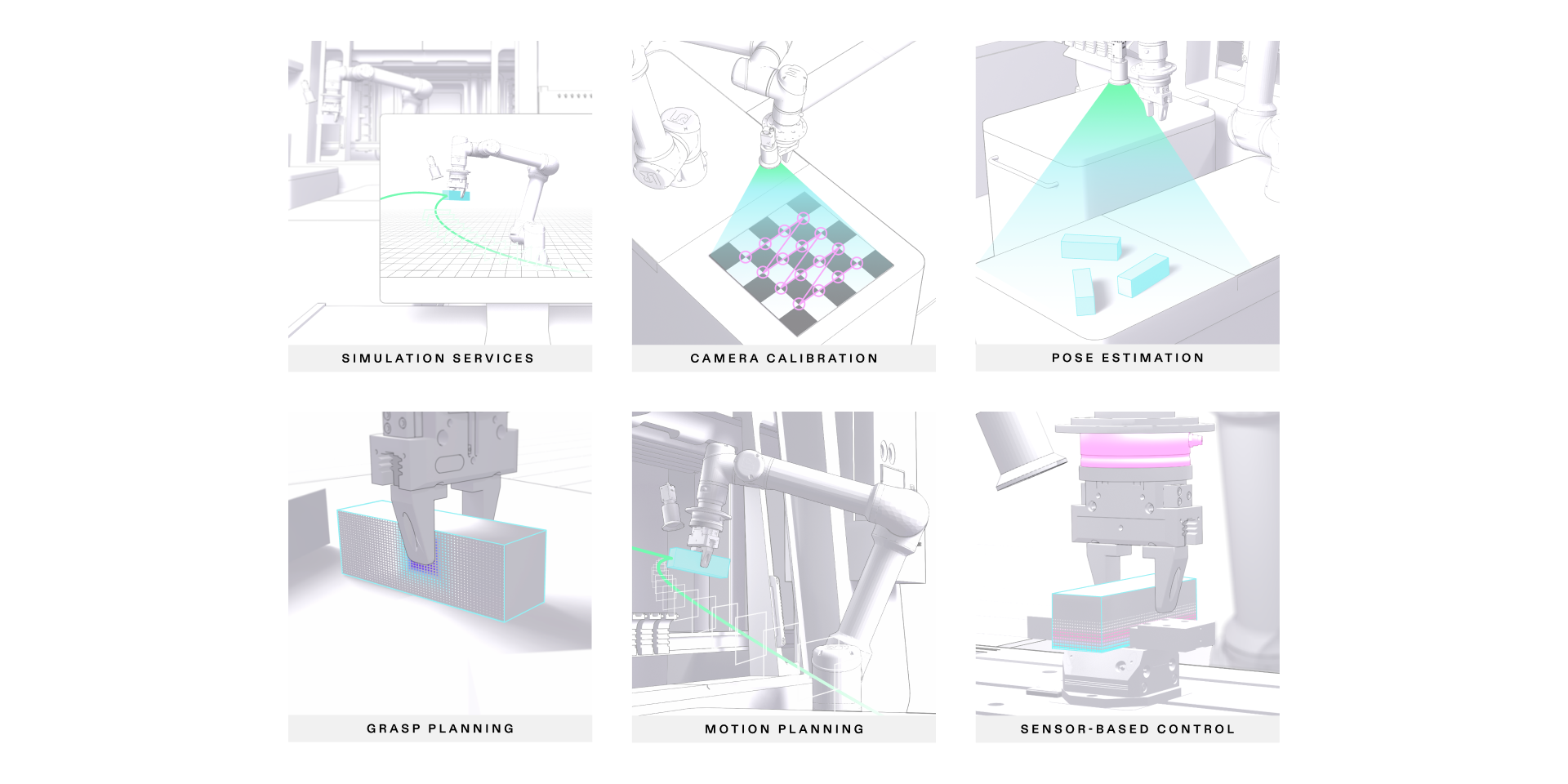
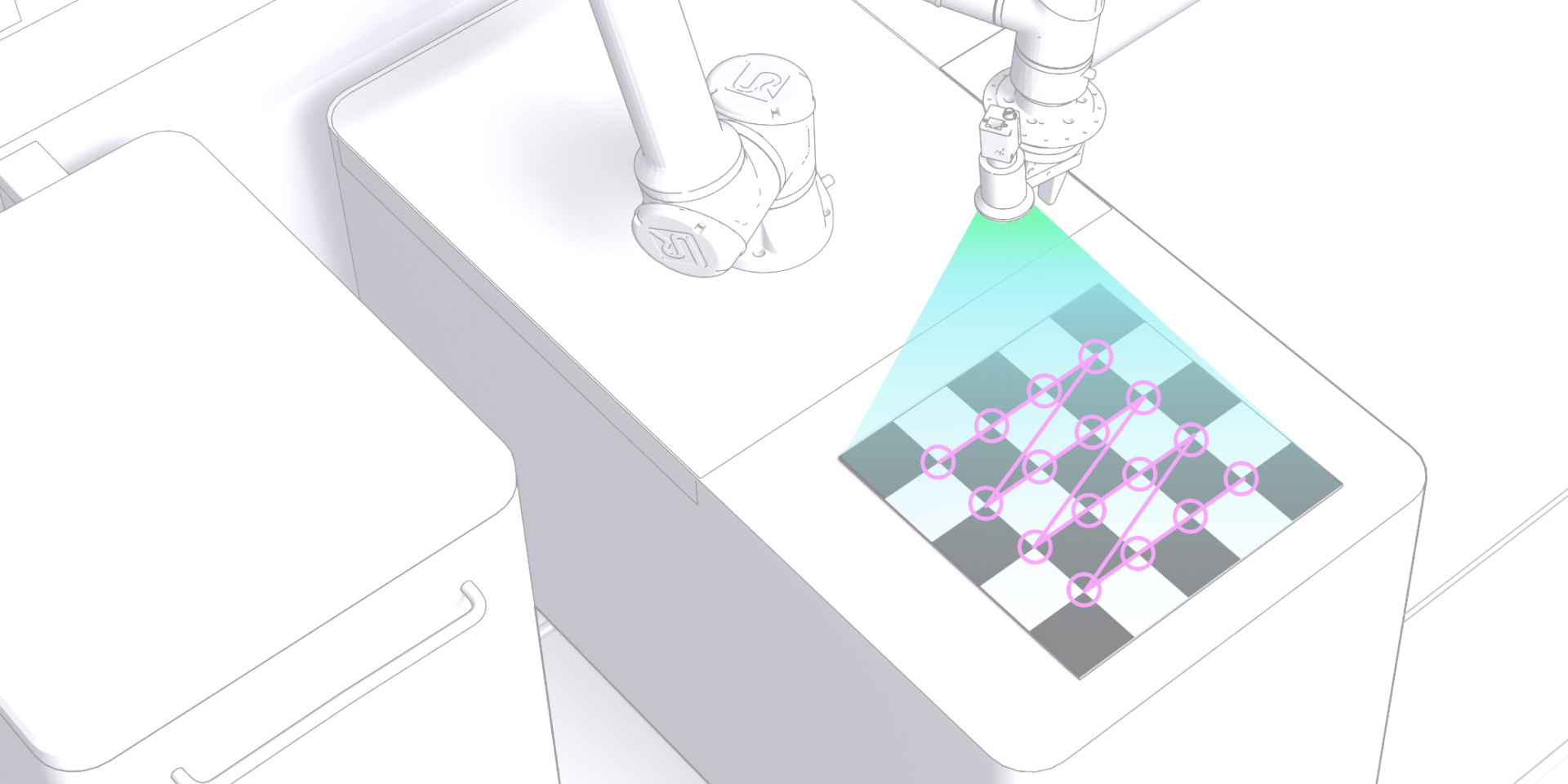
Through Intrinsic Core, anyone can use these capabilities to build next generation solutions. Here’s what’s included:
To give developers and integrators a head start with Intrinsic Core, we’re also releasing the Open Machine Tending Solution (OMTS), which runs both on Intrinsic Core and the Open Robotics Suite. This is a ready-made reference design for a real-world machine shop use case that gives developers a solid starting point to customize their own solution, without needing to build from scratch.
Also built to be open, OMTS makes customization possible for different assets, including hardware from FANUC® and Universal Robots®, and foundation models like NVIDIA FoundationPose. For fabricators and machine shops around the world, intelligently-adaptive machine tending systems can assist operators day to day while helping improve machine utilization and automation of lower value tasks. In the U.S. and Europe alone, there are tens of thousands of businesses that fabricate parts, and only a small fraction have some form of automation. There’s still low to no supply of affordable, manageable AI robotic solutions for them. This reference solution is the first of a series to enable open collaboration and innovation to solve complex automation challenges.
0 / 0
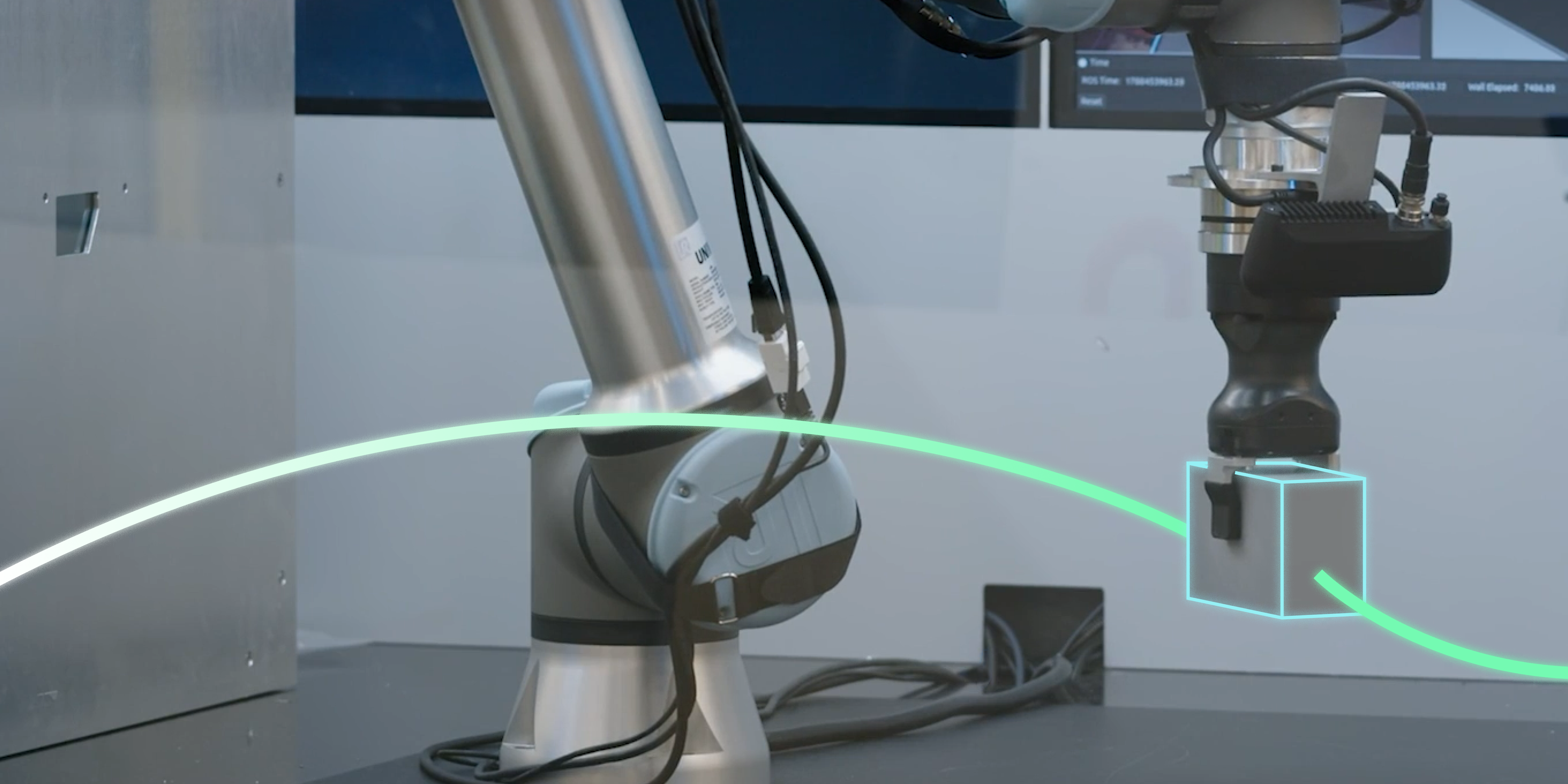
The Open Machine Tending Solution is an open reference design for industrial-grade, AI-enabled CNC machine tending, which is in high demand.
0 / 0
Manufacturing businesses and their operating teams often need help with everything from machine tending to metal bending and part inspection. Solutions built with Intrinsic Core automatically work with other Intrinsic offerings, including our enterprise services which include advanced AI models, Intrinsic Flowstate, and industrial-grade cloud services. No refactoring or code rewrites needed. Our goal is to make it easier to go from prototype to production by providing more paths to get there.
The introduction of Intrinsic Core and The Open Machine Tending Solution are the first of many steps we can take to make AI more accessible to build with and use day to day. We’re in the early days of our open source journey, and while using Intrinsic Core continues to require some basic proficiency in robotics, we’re excited to share what we’re building. If you’ll be attending ROSCon 2026 in Toronto, please stop by the Intrinsic booth to talk with our team and check out live demonstrations.
Help shape the future of Physical AI, try Intrinsic Core and become a part of the Intrinsic developer community. We invite you to build with us, alongside the ROS community, and those supporting open robotics innovation.
0 / 0